October 07, 2026
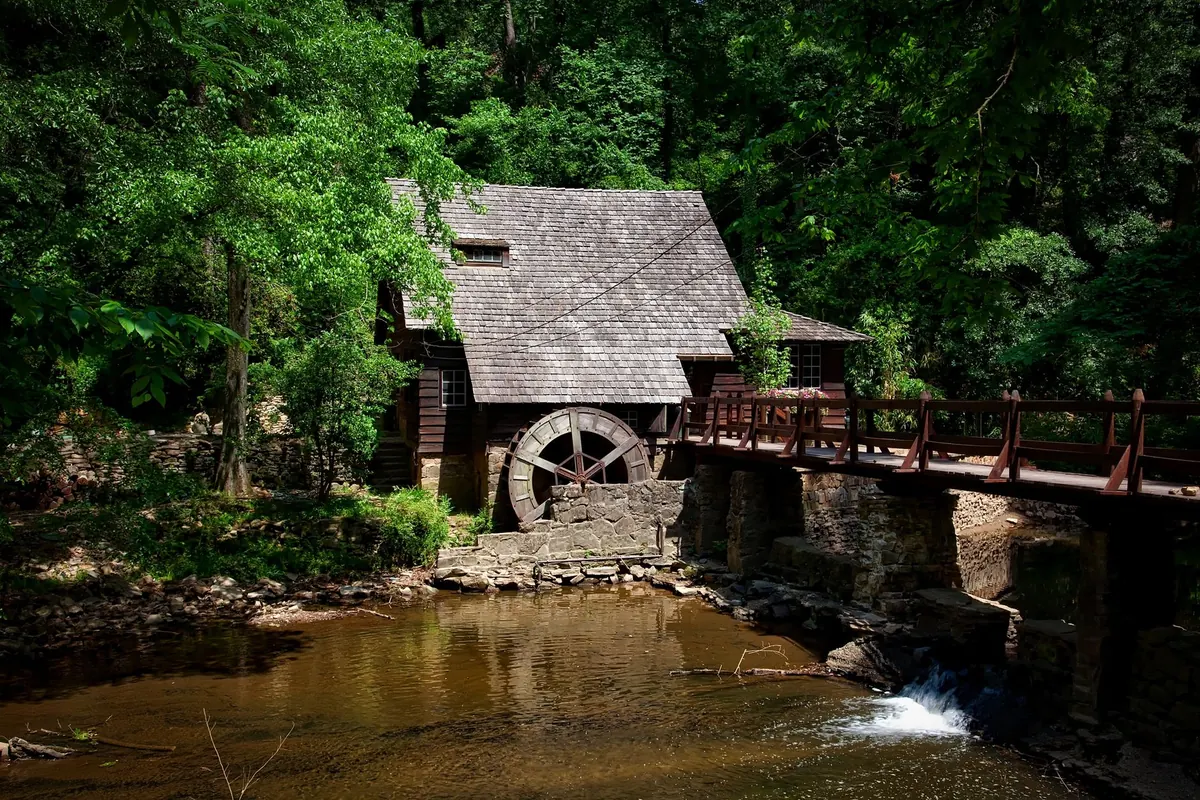
You are following a path beside a stream when a low stone wall appears under the bracken. A little farther on, there is a flat, damp hollow and a straight channel running above the water. Is it a mill? And if so, what turned the machinery—water or wind? The answer usually lies less in the ruin itself than in the land around it. Water mills and windmills were built to capture two very different kinds of power, and each left a distinct signature on the ground. Once you know what to look for, a few minutes of careful looking can turn a jumble of stones into a working site again.
Start With the Land, Not the Ruin
A water mill needs fall and flow. It wants a stream with enough drop, or a pond that can be released through a channel, and it usually sits in a valley, a hollow or a riverside shelf where the water can be led to the wheel. A windmill needs exposure. It wants a hilltop, a ridge, a coastal plateau or an open field where the wind arrives without interference from trees and buildings.
That difference in setting is your first clue. A stone building packed into a wooded stream valley is more likely to be water-powered. A circular foundation on a bare ridge, with wide views in every direction, is more likely to be a windmill. Both needed carts and people, so both may have tracks, bridges and gateways. But only one needed a reliable head of water, and only one needed clean wind.
Do not stop at the first match. A building beside water may be a house, a barn or a workshop that simply used the stream for washing or drainage. A round tower on a hill may be a dovecote, a folly or a converted kiln. The land gives you a hypothesis; the details on the ground confirm it.
Water Mills: Follow the Channel Before the Building
The mistake many walkers make is to look at the ruin first. At a water mill, the real evidence often begins upstream. Follow the stream for a hundred metres, then look at the bank above it. Is there a straight, level channel running along the contour? Does it end at a stone wall, a sluice or a dark opening? Can you find a low weir or a line of stones across the stream? These are the parts of the mill that survive longest because they were built to move water, not to look pretty.
The Waterworks Are the Giveaway
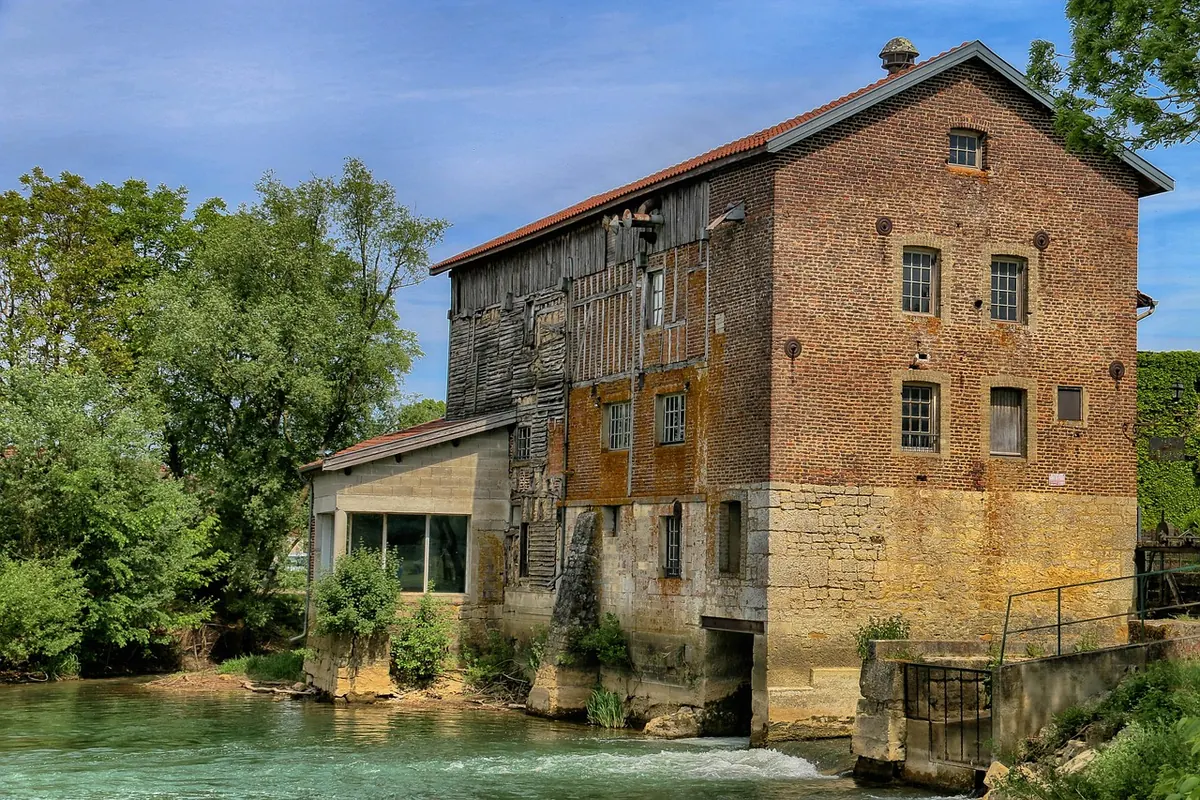
A mill leat, also called a headrace, often looks like a dry ditch or a suspiciously flat path. It may be stone-lined, overgrown with moss, or filled with leaf litter. Below the mill, a tailrace carries water away; it can look like a second stream joining the main one. Between the two, look for a wheel pit: a rectangular or arched stone chamber, often damp and shaded, sometimes with iron fittings or a worn axle hole. A millpond may survive as a shallow, flat-bottomed hollow with an embankment and an overflow channel. A sluice gate may be gone, but its stone slots and abutments often remain.
What a Water Mill Leaves Behind
- A straight, level channel above the stream, often running along a hillside contour.
- A weir, low dam, sluice or stone abutments that once controlled the water.
- A wheel pit near the building, sometimes rectangular, arched or partly flooded.
- A millpond, overflow channel or damp hollow with water-loving plants.
- Stone foundations close to the water, with dressed stones or a reused millstone in a wall.
- Cart tracks, a small bridge and a yard sized for bringing grain in and flour out.
Water mills can be small. A modest stream that would not turn a big wheel may still have powered a small corn mill or a farm mill. Look for the fall: even half a metre of drop, concentrated by a weir and a leat, can be enough. If the channel is straight, level and clearly artificial, and it leads to a stone structure near water, you are probably on the right trail.
Windmills: Look for Circles and Clear Horizons
Windmills announce themselves in a different way. The best clue is often a shape: a circle of stone, a low mound, or an octagonal brick base standing on open ground. The sails and cap may be gone, and the tower may be roofless, but the footprint tends to survive. If you are on a ridge and see a circular ruin with thick walls and no sign of a water channel, think wind.
Three Windmill Footprints You Might Meet
A post mill was a timber body balanced on a central post so that the whole mill could be turned into the wind. What remains may be a low mound, a central post setting, cross-trees or a ring of stone pads. A smock mill was a timber tower, often octagonal, usually on a brick or stone base. You may find the base, floor joist holes and a wide cart track. A tower mill was built of stone or brick, often circular, with a rotating cap on top. The tower can survive as a shell; look for windows, doorways, beam slots and the circular wall plate where the cap once turned.
Windmill Clues on the Ground
- A circular or octagonal stone or brick base on an exposed site.
- A low mound with a central post setting, typical of a post mill.
- A cart track looping up to the mill, wide enough for grain and flour.
- Iron pintles, bolts, gearing scars or mounting points for sails and a cap.
- No leat, pond or wheel pit; drainage may exist, but not a controlled head of water.
- A site chosen for wind, often on the highest open ground nearby.
Windmills sometimes stood near a road or a village edge rather than on a remote summit, but they still needed air. Trees may have grown up since the mill went out of use, so a site that looks sheltered today may once have been far more open. Look at the surrounding banks and walls: a mill mound is often deliberately raised, with a level top and a track spiralling or sloping up to it.
Shared Clues, and the Traps They Set
Both kinds of mill used millstones, and both leave stone foundations, tracks and fragments of iron. That is where confusion creeps in. A millstone in a wall proves that milling happened nearby, not what powered it. A round building could be a windmill, but it could also be a kiln, a dovecote or a small folly. A channel could be a mill leat, but it could also be drainage, irrigation or a boundary ditch.
Build a case from several clues rather than trusting one. Check the water: does the channel have a clear source, a fall and a destination at a building? Check the shape: is there a wheel pit, or a circular tower with cap mountings? Check the access: does the track lead to a waterside yard, or loop up to an exposed mound? Place names can help—Mill Lane, Mill Farm, Windmill Hill—but they are hints, not proof. Old maps are better: they may label a corn mill or windmill and show the building’s shape. If you carry a map, compare the contours with what you see. Water needs a drop; wind needs a rise.
A Ten-Minute Trailside Survey
- Step back. Look at the wider landform: valley and stream, or ridge and open sky?
- Trace the water. Walk upstream for a weir, pond or leat; look downstream for a tailrace.
- Walk the outline. A rectangular wheel pit suggests water; a circle or octagon suggests wind.
- Find the power evidence. Look for axle holes and wet stone chambers, or a central post and cap ring.
- Check the approach. A track to a waterside yard fits a water mill; a track looping to a hilltop fits a windmill.
- Look for reused stone. Millstones, dressed blocks and iron fittings can confirm a mill, whichever type it was.
- Record what you see. Note the location and take photographs from several angles. Leave the stones where they are.
Closing: Read the Land, Leave the Stones
The most reliable way to identify a historic mill is to read the whole site. Water mills leave a trail of channels, ponds and wheel pits; windmills leave circles, mounds and exposed footprints. When the clues disagree, trust the landform and the water. A ruined wall is only the beginning.
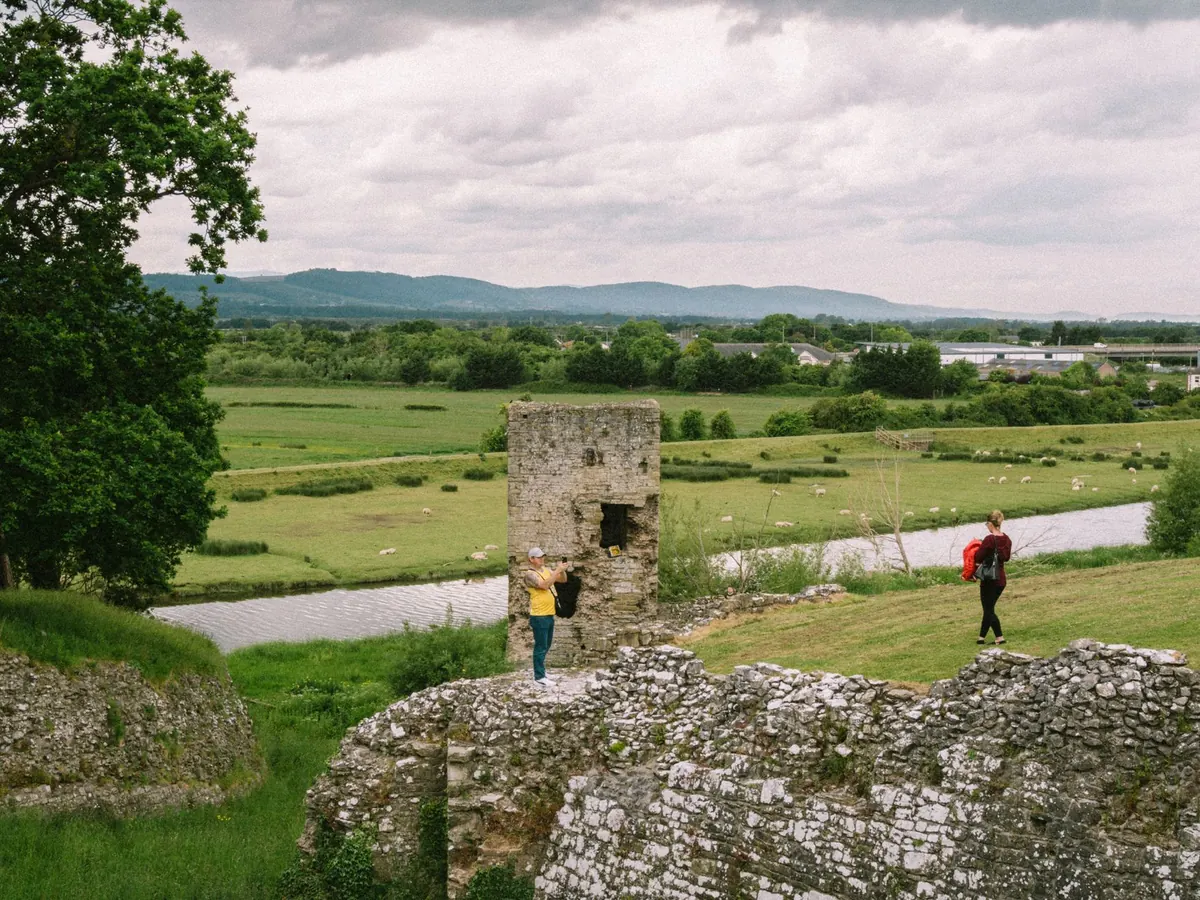
Treat these places gently. Do not climb unstable masonry, enter flooded wheel pits or move stones to see what lies beneath. Stay on established paths, follow local access rules, and take photographs rather than souvenirs. The best find is not a piece of iron in your pocket, but a pattern on the ground that suddenly makes sense.
Photo: Pixabay / Pexels